


When comparing prisms and waveguides in AR glasses, the choice largely depends on specific application needs and design priorities. Here’s a breakdown of each:
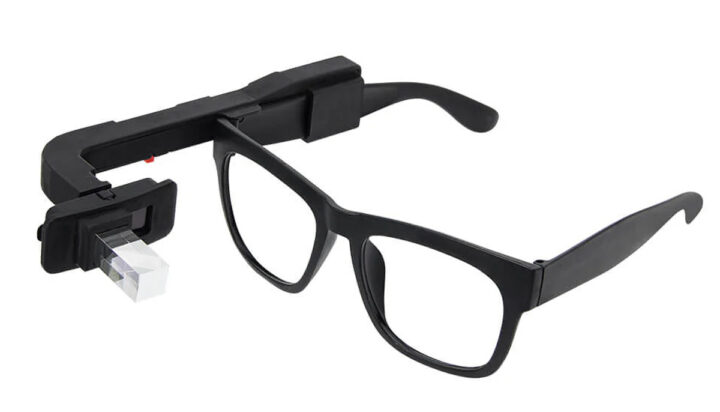
Prisms
Advantages:
- Simplicity of Design: Prisms can be easier to integrate and manufacture, often resulting in more straightforward optical paths.
- Wide Field of View: They can provide a wider field of view, enhancing immersion in AR experiences.
- High Optical Quality: Prisms typically offer good image quality with minimal distortion.
Disadvantages:
- Size and Weight: Prisms can add bulk to the device, potentially making them less comfortable for extended use.
- Optical Limitations: They may not manipulate light as efficiently as waveguides, which can impact brightness and clarity.

Waveguides
Advantages:
- Compact Design: Waveguides allow for thinner and lighter designs, making AR glasses more stylish and comfortable.
- High Resolution: They can support higher pixel densities, leading to sharper images.
- Scalability: Waveguide technology can be scaled effectively for various applications.
Disadvantages:
- Complex Manufacturing: Fabrication processes for waveguides are generally more complex and costly.
-
Field of View: Depending on the design, waveguides may have a narrower field of view compared to prisms.

Conclusion
For applications prioritizing portability and sleek design, waveguides are often better. However, if image quality and a wider field of view are more critical, prisms could be the preferred choice. Ultimately, the decision depends on the specific requirements and use cases of the AR glasses.